

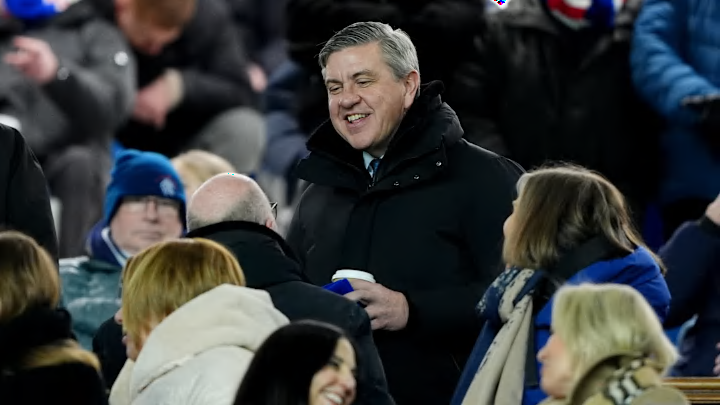
Senior Rangers figures, including Andrew Cavenagh, held an online roundtable this week with representatives from fan media, the Fan Advisory Board, NARSA and other supporter groups to discuss the club’s direction, leadership structure and long-term vision.
The informal session marked the first major engagement of its kind since October, when Kevin Thelwell and Patrick Stewart were publicly backed by the board.
Since then, each were axed and both the CEO and sporting director recruitment processes have continued behind the scenes – and Cavenagh was open about the lessons learned along the way.
Rather than deflecting responsibility, he acknowledged that mistakes have been made at executive level. However, he stressed that the board is taking ownership of those decisions and is committed to improving the way the club is run.
Above all else, Cavenagh made it clear that the first-team squad remains the club’s top priority. Everything else – commercial growth, infrastructure, long-term planning – sits beneath the immediate need to strengthen and support the football operation.
CEO Search: “They Have to Get Rangers”
On the ongoing CEO recruitment process, Cavenagh spoke positively about the appeal of the Rangers role.
He believes the club remains an attractive opportunity for ambitious, high-quality candidates from across the football and business landscape.
While he declined to comment on specific individuals – including recent speculation surrounding St Mirren’s Jim Gillespie – he outlined the qualities Rangers are looking for.
Any incoming CEO must understand the identity, culture and expectations that come with leading a club of Rangers’ size and history.
The board has spoken to both high-profile figures and lesser-known candidates, but the emphasis remains on finding the right person rather than the most famous name.
Crucially, Cavenagh stressed that the next CEO will not be left to operate alone.
This will not be a “one-person show.” Whoever takes the role will receive support from the board and ownership group, with a collaborative structure designed to avoid the mistakes of the past.
Commercial Growth and Global Reach
Merchandising was another major talking point, particularly Rangers ambition to make club products more accessible to supporters around the world.
The club is actively exploring ways to expand its international retail presence, including the possibility of opening more overseas stores.
With a global fanbase, Rangers see commercial growth as a vital revenue stream – not just for sustainability, but for reinvesting into the playing squad.
Cavenagh also addressed Financial Fair Play concerns, suggesting the club is in a stronger position than in previous seasons.
Increased revenues have eased pressure, giving Rangers slightly more flexibility than they have enjoyed in recent years.
Stadium Expansion on the Table
Long-term infrastructure plans were also discussed, including potential options for expanding Ibrox’s capacity.
One idea under evaluation involves lowering pitch level to create additional seating areas, though no firm decisions have been made.
The board is currently assessing feasibility, cost and impact before progressing any further.
While nothing is imminent, the fact expansion is being considered reflects Rangers’ desire to future-proof the stadium and match supporter demand.
Academy Pathway Remains Key
The closure of a recently launched overseas academy was acknowledged, but the broader focus remains on strengthening Rangers own youth development system.
Cavenagh emphasised the importance of keeping Scotland’s top young talents at the club rather than losing them to English academies.
The ultimate goal is to provide a clear pathway into the first team, ensuring promising players see a future at Ibrox.
However, there were no immediate plans discussed for introducing a B team into the league structure – the B team was withdrawn from the Lowland League in 2024 and the squad was disbanded with the Under 19’s now the level below the first-team.
Reconnecting with Former Players
One of the more encouraging aspects of the discussion was the club’s renewed effort to reconnect with former Rangers players.
Cavenagh revealed he has been meeting and dining with ex-players to explore ways of bringing them back into the club environment – whether through coaching roles, scouting, mentoring, or advisory positions.
The aim is to pass on knowledge, standards and culture to younger players, helping them understand what it truly means to represent Rangers.
Away Allocations and Fan Engagement
Away ticket allocations were raised, with the club continuing to push for improved access for travelling supporters. However, this requires cooperation from other SPFL clubs – something that has proven difficult to secure consistently.
Cavenagh acknowledged the importance of fan engagement and made clear that meetings like this are vital. Rangers want to hear directly from supporters about the issues that matter most, while also keeping fan groups informed about the club’s direction.
January Transfers and Röhl’s Role
On the January transfer window, Cavenagh accepted that deals – especially mid-season – take time. However, he confirmed Rangers are active in the market and would have been regardless of whether the club was in a title race.
Certain areas of the squad clearly need strengthening, and work is ongoing to address them.
Danny Röhl’s influence was also highlighted, with Cavenagh praising the head coach’s tireless efforts to bring success back to Ibrox. The board’s ambition is not limited to results on the pitch – they want Rangers to thrive both footballing-wise and structurally as a club.
 Add us as a preferred source on Google