

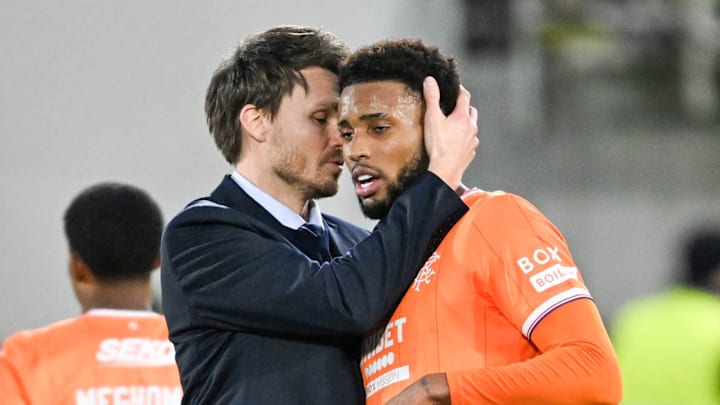
Danny Röhl conceded Rangers missed a significant opportunity to close the gap at the top of the Premiership, acknowledging that results, not performance, now define the reality of their position after a costly 2-1 defeat to Hearts at Tynecastle.
While encouraged by his team’s competitiveness, Röhl was candid about the wider implications of defeat, particularly in the context of a tightening title race.
“We missed a big opportunity today,” he admitted.
“This is hard to take.”
Röhl’s comments reflected a recurring theme of his post-match analysis: progress must translate into points.
Promising spells and positive structure count for little if decisive moments go unpunished.
“We spoke about steps,” he said.
“Today it was more side steps.
“Football is not about ‘if’ - it’s about the result.”
That realism extended to the league table, where Rangers now find themselves with little margin for error.
Röhl accepted that the gap to the leaders has widened again, increasing pressure on every upcoming fixture.
“Today we couldn’t win, and then of course the gap is more open again,” he said.
“That’s tough.”
Despite the setback, Röhl was keen to highlight the effort and commitment shown by his players, particularly in the second half as they chased the game.
“I think my team tried everything,” he said.
“They put all the effort in, but in such a game it’s not easy to come back.”
Looking ahead, Röhl struck a balance between patience and urgency.
While stressing the season remains long, he admitted Rangers must now convert competitiveness into consistency.
“What makes me positive is that I see a competitive group,” he explained.
“I see players who are really trying.”
However, he also acknowledged similarities with previous narrow defeats, including in Europe, where Rangers have struggled to win key duels and 50–50 situations.
“We have to be more clinical,” Röhl said.
“Better decision-making. If we do this, then we take more points in the future.”
Importantly, Röhl rejected the idea that Rangers’ problems stem from tactical structure or individual shortcomings alone.
Instead, he framed the issue as one of collective execution under pressure.
“It’s not about shape or individuals,” he said.
“It’s about how we act in key moments.”
When questioned on mistakes at the back, Röhl again defended his players, noting the disproportionate consequences of errors in defensive areas.
“If you make a mistake higher up the pitch, the impact is smaller,” he said.
“In the last line, the impact is big.”
Still, his focus remained firmly on response rather than recrimination.
“I will never complain about one player,” Röhl added.
“The next chance is next weekend.”
 Add us as a preferred source on Google